Simple festive fun for families
Christmas is a magical time for young children, filled with twinkling lights, colourful decorations and family traditions. But with the cost of Christmas adding up, many parents are looking for ways to keep little ones entertained without spending a fortune.
The good news is that you do not need expensive toys or elaborate outings to create wonderful memories. Here are eight fun and affordable Christmas activities for young children, with plenty of opportunities to learn through play.
- Make Your Own Christmas Decorations
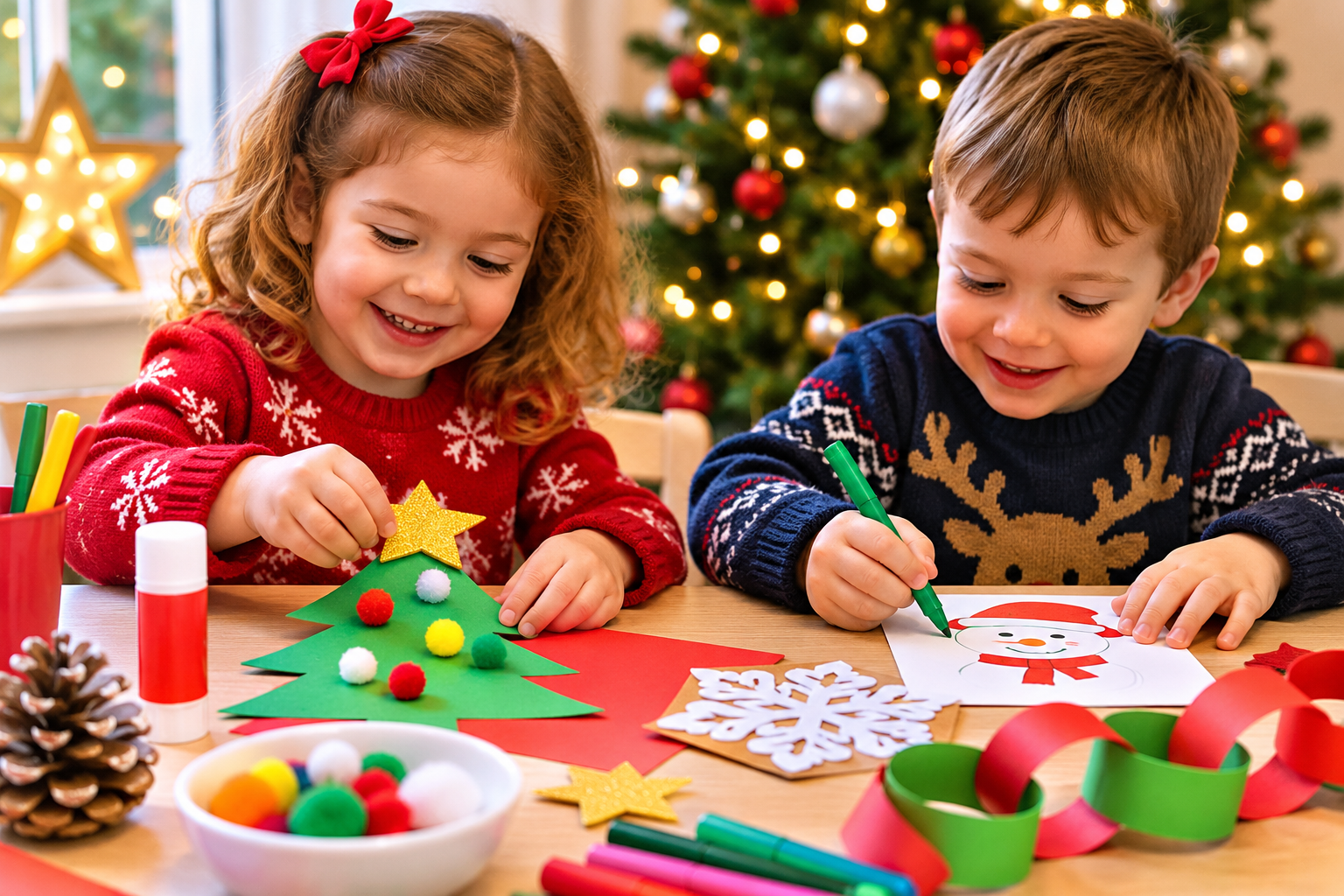
Turn everyday materials into something special. Use coloured paper, cardboard, crayons, glue sticks and ribbon to make paper chains, cardboard stars, Christmas trees or handprint cards.
Younger children can colour and stick, while older children practise cutting and creating their own designs. These activities support creativity, hand-eye coordination and fine motor skills. Supervise scissors and small craft materials.
- Go on a Christmas Lights Walk
Wrap up warmly and take an evening walk around your neighbourhood to admire festive displays. Make it a game: Can you spot a Christmas star? Count three Christmas trees? Find something red?
Families in Gravesend, Northfleet and Swanscombe can enjoy exploring familiar streets together. The walk encourages observation, counting, colour recognition and conversation. Keep children close and take extra care near roads after dark.
- Create a Christmas Sensory Play Tray
For a simple festive sensory activity, gather large pieces of red and green fabric, soft Christmas-themed toys, large cardboard shapes and child-safe stacking cups.
Let children explore different textures and sort colours. Toddlers might enjoy putting red objects in one container and green objects in another. Sensory play develops curiosity, language and early problem-solving. Avoid small objects, loose beads and decorations that could be choking hazards.
- Bake Simple Christmas Treats Together
Try making star-shaped biscuits or decorating plain biscuits with a little icing. Young children can help stir ingredients, press biscuit cutters and count their creations. Older children might enjoy measuring ingredients.
Baking introduces early mathematics, following instructions and taking turns. Check
allergies, select age-appropriate toppings and keep children away from hot ovens and sharp
utensils.
- Enjoy Christmas Storytime
Borrow a festive book from your local library or revisit a favourite story you already have.
Create a cosy reading corner and ask simple questions: What might happen next? How is the
character feeling? What can you see in the picture?
Reading together helps develop vocabulary, listening, imagination and emotional
understanding. It is a lovely way to slow down during a busy season.
- Make Homemade Christmas Cards
Fold some paper and let children create cards for grandparents, friends or neighbours. They
could draw Christmas trees, paint winter scenes or make handprint pictures.
Older children can try writing their names or short messages. Younger ones can explore
colours and mark-making. Card-making supports creativity, fine motor development and the
joy of doing something thoughtful for someone else.
- Organise a Christmas Treasure Hunt
Hide a few large, child-safe festive objects or pictures around the living room. Offer clues
such as “look beside the sofa” or “find something under the table”. For younger children, use
picture clues; older children may enjoy a sequence of hints.
Treasure hunts practise listening, memory, problem-solving and positional language such as
under, behind and beside. No expensive prizes are needed.
- Have a Christmas Music and Dance Party
Play cheerful festive music and invite children to clap, march, twirl or invent their own
dance moves. Musical statues can be great fun, while babies and younger toddlers may prefer
gentle movement and familiar songs.
Music and movement support coordination, rhythm, listening, confidence and selfexpression.
Most importantly, they create happy moments together.
Christmas Learning Through Play
Many of these simple activities connect with areas of learning in the Early Years Foundation
Stage (EYFS), including communication and language, physical development, personal, social
and emotional development, mathematics and expressive arts and design.
There is no need to turn every activity into a formal lesson. Children learn by exploring,
asking questions, making choices and enjoying everyday experiences.
Making Christmas Memories Without Spending Too Much
Christmas does not have to be expensive to be special. Decorating a homemade card, sharing
a bedtime story or taking a walk to see the lights may become the moments children
remember most.
Choose activities that suit your child’s interests and stage of development. You do not need to
plan something every day. A little creativity, patience and time together can make the season
wonderfully special.
A Festive Message from Frances Childcare
At Frances Childcare, we believe children learn and develop through play, exploration and
meaningful everyday experiences. We hope these ideas inspire some creative, affordable
family fun this Christmas.